
Bench Warrants in Sussex County
“Bench warrant” is a plain-language name for process tied to a court obligation, often a missed appearance. Virginia courts may use a show-cause summons, capias, or failure-to-appear arrest warrant. Sussex General District Court handles traffic and adult misdemeanor matters; Circuit Court holds felony trials and felony case records; JDR handles juvenile, domestic-relations, and support matters.
For a missed payment or court condition, ask the clerk which process was issued. A willful failure to appear under Virginia Code §19.2-128 can bring a separate charge and possible bond forfeiture. The court decides the case-specific result.
Sussex Bench Warrants Start at the Right Court
Traffic and misdemeanor matters usually begin with the combined GDC clerk at 15098 Courthouse Road, 434-246-1096. Felony process belongs with Circuit Court and its clerk at 15088 Courthouse Road. JDR matters use the combined courthouse but have added privacy limits. The court named on the notice matters more than the town where a person lives.
Sussex’s court schedule separates county, Town of Waverly, and State Police traffic sessions. A town name on a summons does not mean a separate town warrant court exists.
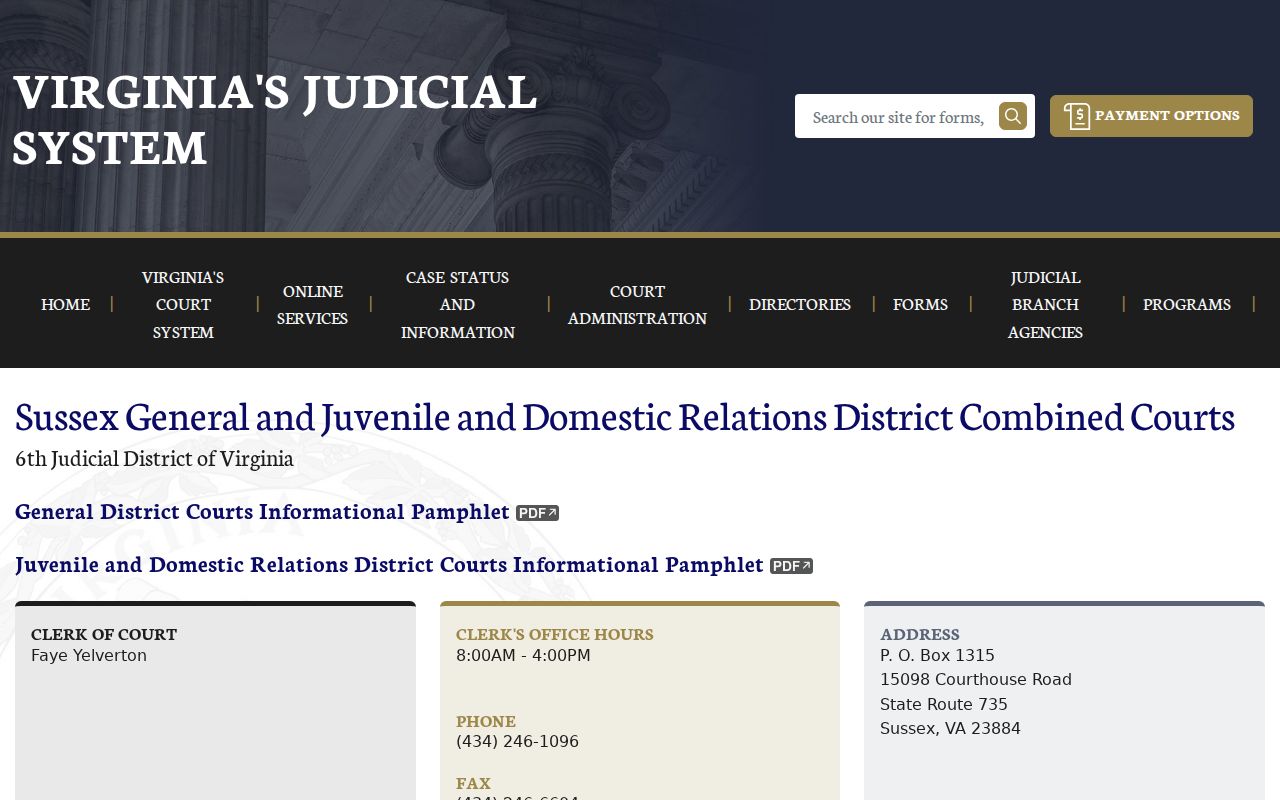
The combined-court schedule helps route a missed date to the right court clerk.
How a Sussex County Bench Warrant Is Issued
The clerk’s office or judicial officer identifies the missed event and the process entered in the case. The General District Court manual lists DC-360 show-cause summons, DC-361 capias, and DC-312 or DC-314 failure-to-appear warrants as separate forms. They are not interchangeable labels.
Virginia does not offer a public statewide active-warrant search. A process may be entered into law-enforcement systems, but the public checks case information through OCIS and confirms the order with the issuing court. The clerk can say whether a new date, recall request, or appearance is needed.
Sussex County Bench Warrant Forms: DC-360, DC-361, DC-314
A DC-360 is a show-cause summons to appear and explain an alleged failure. DC-361 is a capias for attachment of the body. DC-312 and DC-314 are arrest-warrant forms for felony and misdemeanor process. They are distinct court tools, and the case file shows which one was used.
| Process | Purpose | Where to confirm |
|---|---|---|
| DC-360 | Orders a person to answer a show-cause issue | Issuing court clerk |
| DC-361 | Capias bringing a person before court | Issuing court clerk |
| DC-312 / DC-314 | Felony / misdemeanor arrest-warrant forms | Circuit or GDC clerk |
Bench Warrant vs Arrest Warrant
A bench or failure-to-appear warrant is tied to a court case and a missed obligation. An arrest warrant begins with a sworn complaint and a probable-cause review. Both can lead to arrest, but the question that resolves each is different. Read more about Sussex County arrest warrants and their issuance route.
| Feature | Bench Warrant | Arrest Warrant |
|---|---|---|
| Trigger | Missed appearance, contempt, or noncompliance | Complaint and probable cause |
| Who Issues It | Judge or other authorized judicial officer | Judge or magistrate |
| Underlying Case | Existing court obligation | Alleged offense |
| How It Clears | Follow the issuing court’s order | Follow the issuing court’s order |
Sussex County Bench Warrant Payment Defaults and Capias
Virginia court forms use “capias” and “capias pro fine” for specific processes. A capias can follow a fine, support, suspended sentence, or order violation; it is not a catch-all word for every warrant. A show-cause summons may come first, depending on the matter and court order.
Sussex has no public fee schedule for warrant recall, no fixed payment-plan policy located, and no public bond-window details. Ask the clerk for the amount, the allowed payment route, and whether a hearing or motion is required.
How to Resolve a Bench Warrant
Call the issuing clerk before going to the courthouse or sheriff. Ask which form or order is active and whether counsel should request a recall under the official Virginia criminal-form catalog, including DC-323 Recall of Process. The clerk can explain filing requirements but cannot give legal advice.
- Confirm the court, case number, process type, and whether it remains active.
- Ask a lawyer whether to seek a recall, new date, payment agreement, or voluntary appearance.
- Follow the clerk’s instructions for filing or appearing; Sussex publishes no walk-in warrant window.
- Resolve the missed obligation and obtain confirmation that the court updated the file.
Caution: Do not assume a payment or a new court date cancels process. Ask the clerk to confirm the recall or release was entered.
Sussex County Bench Warrant: Clerk Contact Before Surrender
The Sheriff’s Office does not publish a walk-in surrender counter, bond-window hours, or a general warrant appointment process. Call the clerk first to identify the case and ask what the issuing judge requires. Then ask the Sheriff’s Communications or Jail option whether a service or custody question belongs with them.
Sussex lists a magistrate office in Waverly as available 24 hours for judicial review and bail decisions. That does not mean the office is a public warrant search desk or that every surrender is accepted at any hour.
Which Sussex County Court Issued It
The issuing court controls the case record and recall. Sussex town ordinance and traffic matters generally return to General District Court; there is no separate public municipal-court warrant portal located. JDR matters require special care because juvenile and support records have access limits.
Check the court name on the summons, then use the Sussex County warrant search steps to locate its public case route. For felony matters, contact the Circuit Clerk. The sheriff answers service questions, not whether the judge has recalled the process.
Sussex JDR Warrants Need Careful Routing
A juvenile, domestic-relations, or child-support matter may not appear in the same public results as an adult GDC case. The combined clerk can direct a caller to the right division, but staff may be limited in what they can disclose. Ask how to confirm your own case through the proper channel.
For a traffic infraction, Virginia Code §19.2-258.1 says the court may hear the matter without the person present and may not issue a §46.2-938 warrant for the infraction alone. A traffic misdemeanor follows a different path.